New Doctors Need the Country
Discussion event on 13.09.22 in Bad Orb
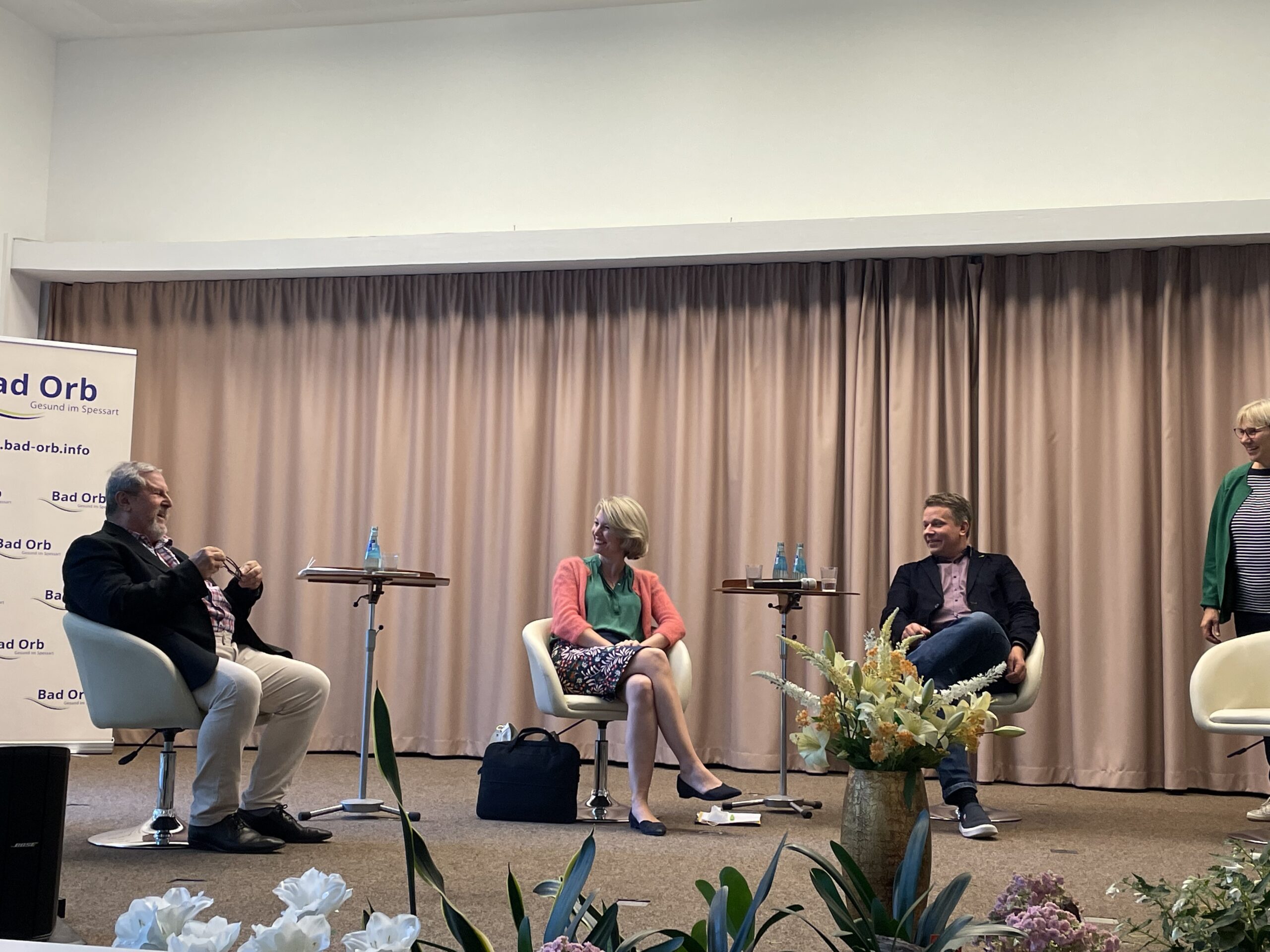
On 13.09.22 about 40 guests found their way to the discussion event of the district association of Bündnis 90/Die Grünen Main-Kinzig for medical care in the Main-Kinzig-Kreis in the garden hall of the concert hall Bad Orb. Moderated by the green Orber city councillor Beate Boege-Sonnek and the group leader of the Greens in the city council, Philip Schinkel, the invited speakers discussed vividly with each other on the podium and then also vividly with the audience.
There was a general consensus that the situation for medical care in the district is a serious problem, not least due to demographic developments.
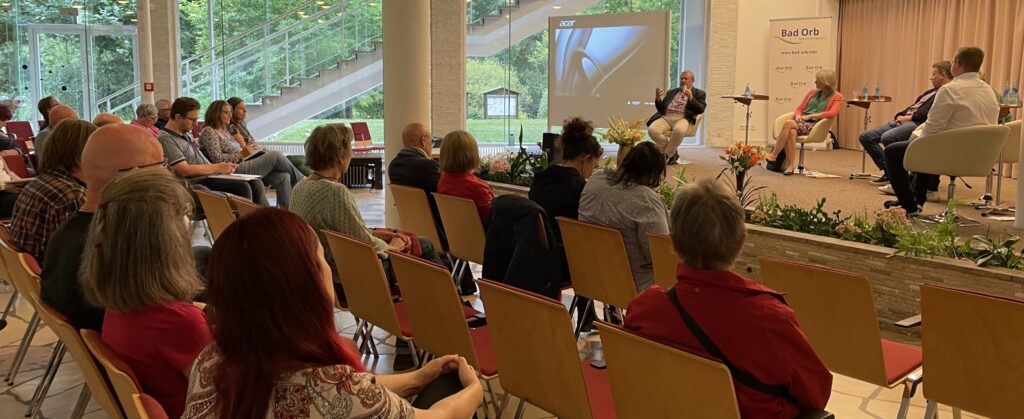
It's not just about missing doctors. Georg Freund, Managing Director of the rehabilitation clinics Küppelsmühle emphasized. In general, there is a lack of nurses, physiotherapists and occupational therapists, and even cleaners are difficult to find for the clinics. His proposal: abolish the rigid separation between inpatient medical care and outpatient care, so that patients can also attend consultations and follow-up care in the clinics. First of all, the reduction of numerous documentation obligations for medical personnel could ‘immediately result in 20-30% release more capacity to provide medical care to patients’.
Kathrin Anders, Member of the State Parliament and spokeswoman for health policy of Bündnis 90/Die Grünen in the Hessian State Parliament explained some measures and programs that the state government has put in place to improve the situation. Among other things, grants from the state for the establishment of health centers (municipal and private), for the takeover of a single practice, the establishment of a branch practice or also for the design of a digital special route.
The new Double advance rate in medical studies, which is intended in particular to strengthen primary care in rural areas, was the subject of discussion. ‘It is not the Abi grade that is exclusively relevant in this competition, but also the personal and subject-specific aptitude that can be proven with experience from relevant training, professional activity, voluntary work or voluntary service’, said Ms Anders.
Frank Dastych, President of the Association of Statutory Health Insurance Physicians explained extensively the enormous economic and psychological burdens many doctors face. He pointed out the considerable operational risks for which the doctor, as an ‘individual entrepreneur’, is usually personally liable. It was disputed that his statement that the supply situation in the district was ‘actually not bad’ was included. His rather negative attitude towards community practices, medical care centres or the assumption of medical tasks by community nurses or the new concept of ‘Community Health Nurses’, which is already being successfully implemented in some European countries, was clear.
Here there was a quite exciting exchange with a guest in the audience, who as a practicing nurse defended the concept of the community Heath Nurses and lamented the conceit of the doctors, who think that only they alone could decide qualified about health issues in patients.
Other voices from the audience complained about the working conditions for nursing and other medical staff, the different treatment of private and health insurance patients at appointments and treatments and the lack of opportunities for patients to participate in the health care system. The numerus clausus and a study period of 13 years were also questioned.
Unfortunately, many innovative ideas such as telemedical health management in companies, mobile care concepts, digital networking, etc. could not be deepened due to lack of time. There could be a follow-up event here.
Conclusion of the evening: There is a lot of thought, but unfortunately most of the programs and measures that have been put in place will help in the short term, but hopefully in 5-10 years. For many older guests in the audience unsatisfactory.
 English (UK)